Molecular Programming Project
Computer science and engineering has mastered complexity for electronic computation — can we do the same for engineering molecular devices and systems?
Learn More
Computer science and engineering has mastered complexity for electronic computation — can we do the same for engineering molecular devices and systems?
Learn More
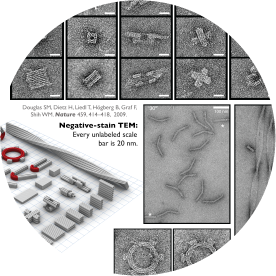
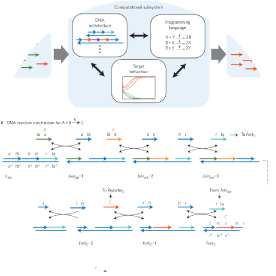
The fundamental principles of computer science have allowed us to master electronic systems with billions of components and software with millions of lines of code to do amazingly complex tasks. The Molecular Programming Project aims to develop computer science principles for programming information-bearing molecules like DNA and RNA to create artificial biomolecular programs of similar complexity. Our long-term vision is to establish molecular programming as a subdiscipline of computer science—one that will enable a yet-to-be imagined array of applications from chemical circuitry for interacting with biological molecules to nanoscale computing and molecular robotics.